

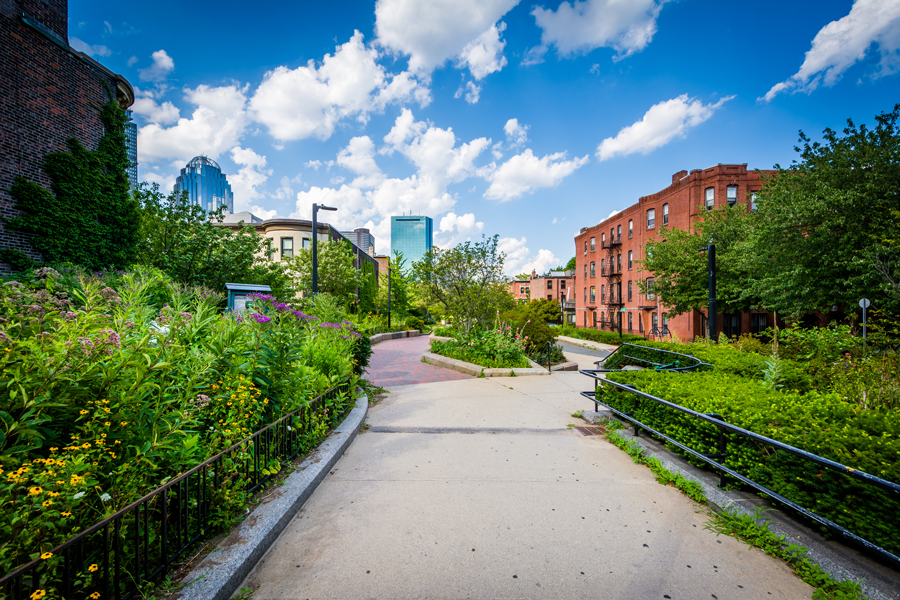
Dreams of the Southwest Corridor
After homes in the Southwest Corridor were removed in a process of eminent domain, architects, residents and community leaders began to see the space as a blank page. What are the dreams and realities of this space?
The Southwest Corridor came to fruition as a result of the expression of the dreams of those in power. Initially, the Department of Public Works staked claim of the land, and purchased houses, businesses, and public land through eminent domain, ultimately destroying and displacing large portions of the existing communities in the South End, Roxbury, and Jamaica Plain.
From the destruction of this land rose the power of the community. Upon seeing their homes demolished for a highway that would benefit suburban commuters rather than inner city people, community members began to dream up a better future in replacement of this highway. Community organizations such as the Greater Boston Committee on the Transportation Crisis, the Black United Front, and the Urban League began to dream up what the Southwest Corridor might look like as it rose through the demolition, rather than there being a highway.
To heal the rift in the Southwest Corridor, community members thought of ways that they might sew in new community assets. Some of the major sectors they sought to improve were health, housing, education, housing, environment, and transportation. Beginning with the Department of Public works plan for a highway, issuing a moratorium to halt this construction, developing a plan with the Boston Redeveloping Agency, and finally creating community-led design plans with steward architects Stull and Lee, today the Southwest Corridor is an expression of many of the dreams that abutters held dear.
“The theme of this project is 'healing the scar.' The scar is physical, social, economic” (Welch on the Southwest Corridor)